

The Pace Car Advantage
We offer a subscription service in the financial planning & analysis field - the field of Profit-Cash-Equity performance.
Specializing in the independent companies in wholesale distribution, Pace Car is path management system for supplementing in-house activity for enhamcing outcomes.
The system manages paths of results - recent and future - for the purpose of presenting and supporting efforts for goal achievement. Particularly important in this process is the use of all types of variance calculations - used to quantify that the company appears headed for going off course from desired outcomes.
Also uncovered are the opposite situations, where opportunity for gain can come into view.
We have an expertise in result paths and result variances that can serve you in achieving Profit-Cash-Equity goals.
Benefits of a
Pace Car Subscription
This chart depicts Pace Car in action with its “1-2 punch”. First, Pace Car is always maintaining lists of your result components and values needed for your Profit-Cash-Equity goals to come together for you. Then, it schedules periodic calculations of the gaps there might be - we can quantify that they are off course. While many of the gaps can be dismissed for good reason, others become leads for us to support you with strategic moves to resolve them and stay on course.
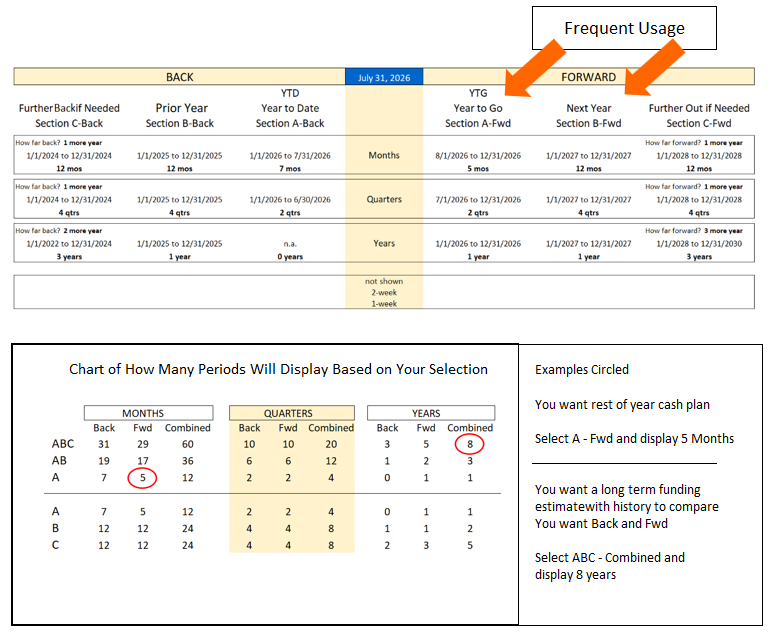
Good for Charts or Report Columns!
Pace Car System’s Organization of Periods
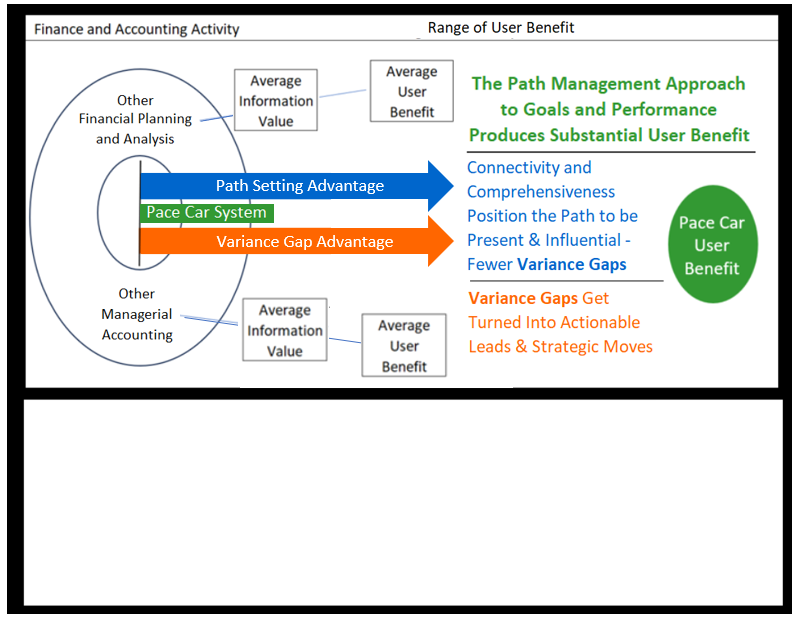
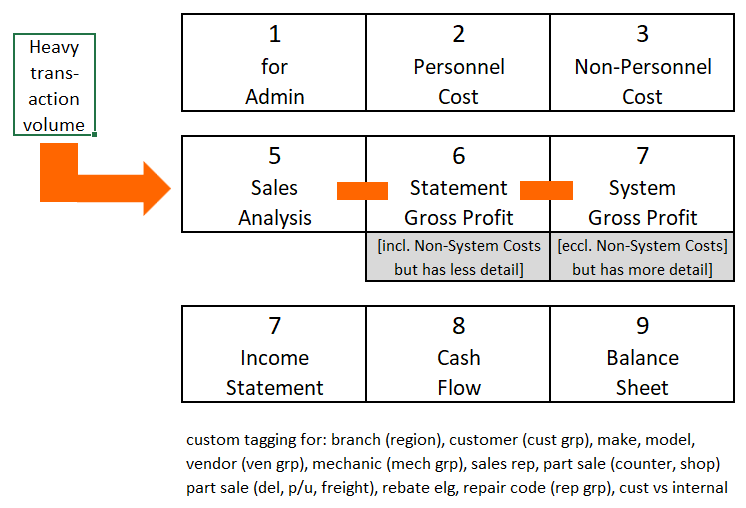
We wanted to get right to some visuals on what is in the Pace Car Path System.
There are two principal selections available made for any piece of work being done: Result and Period
What is the Thinking Behind Paths and Variances?
Here is the chain of events:
1- There are numerous ways to describe the “path” of a company.
2- Two paths can be compared. Most often, we use the Pace Car Path versus the Head Here Path.
3- The former is our best possible; the latter is “if we keep going the way we are.”
4- The difference between the two paths is a “variance.” This is known as the Prime Variance and becomes dominant in the workgroup’s efforts.
5- Variances have causes. They tell stories. Companies need to read these stories.
6- Strategic Moves leverage the stories into influence over the results & set time periods. That is to say, to achieve goals for Profit-Cash-Equity.
7- This is the specialty of Pace Car by BirdTraffic.
We believe that in the world of Financial Planning & Analysis (FPA), our approach covers more ground at a controlled cost than what you will likely see. Blending the benefits of this service with your in-house efforts produces a most effective financial management component for your business.